
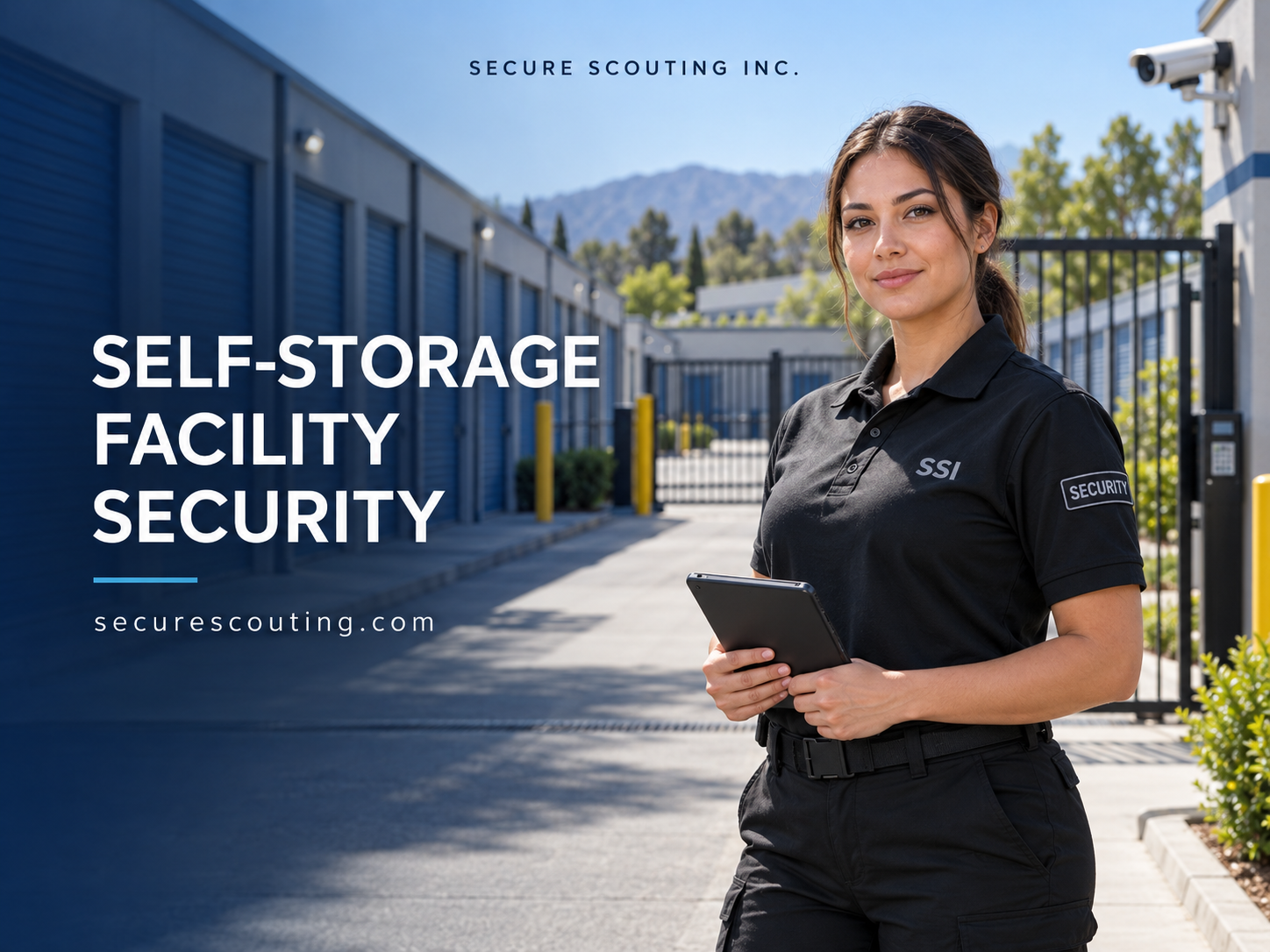
Trusted Self-Storage Facility Security in California
Self-storage facility security helps property managers oversee access, identify suspicious activity, and maintain visibility across their properties. With tenants, moving crews, contractors, and delivery drivers coming and going, a storage facility needs clear procedures for both everyday operations and unexpected situations.
Secure Scouting Inc. provides security guards, mobile patrols, access checks, and monitoring options for self-storage properties in California. Coverage can be tailored to your facility’s layout, tenant access hours, and specific concerns.
Whether you manage indoor storage units, drive-up buildings, or outdoor vehicle storage, a coordinated security plan can help your team respond consistently.
Why Self-Storage Facilities Need Professional Security
Storage properties often contain long rows of buildings, secluded corridors, perimeter fencing, and parking areas that employees cannot continuously observe. While office staff assist customers, activity elsewhere may go unnoticed.
Common concerns include unauthorized entry, gate tailgating, vandalism, trespassing, and suspected tampering with unit doors. Broken lighting or malfunctioning access equipment can create additional problems.
Professional security coverage adds observation, documentation, and a defined response process. Officers can identify concerns, notify management, and follow site instructions. Their visible presence may also help discourage unwanted activity, although no security measure eliminates every risk.
What Our Self-Storage Facility Security Services Include
Effective coverage combines people, procedures, and appropriate equipment. Each service should have clear duties so officers and property managers understand what needs checking and how concerns should be handled.
Entrance Monitoring and Access Control
Automated gates help control entry, but they cannot resolve every access issue. A vehicle may follow an authorized tenant inside, or a visitor may arrive without permission.
Depending on facility policies, officers can:
- Observe vehicles entering and leaving.
- Verify contractor or visitor authorization with management.
- Watch for gate tailgating.
- Report malfunctioning access equipment.
- Communicate access rules professionally.
Officers should follow written procedures when authorization is unclear. This helps maintain consistent treatment of tenants, visitors, and contractors.
Foot Patrols Around Storage Buildings
Foot patrols provide a closer view of areas that are difficult to observe from a vehicle or rental office.
Assigned routes may include indoor corridors, building exteriors, loading areas, stairwells, and pedestrian entrances. Officers can look for visible damage, unsecured common-area doors, unusual activity, and signs of suspected tampering.
For example, an officer who notices damage around a unit door can record the location and notify management. Routine patrols do not involve opening tenant units or handling stored belongings.
Mobile Security Patrols
Mobile patrols provide periodic inspections for properties that need scheduled visits or checks at varying intervals.
During a visit, officers can inspect designated entrances, drive aisles, perimeter sections, and parking areas. Duties may also include checking whether specified common-area access points are secured after closing.
Explore our security patrol services to learn more about patrol coverage.
The frequency of visits should reflect your property’s operating hours and concerns. Periodic patrols provide checks during visits; they do not provide continuous on-site observation between them.
Overnight and After-Hours Coverage
Some facilities allow tenant access after office employees leave. Others close their gates at a designated time. Security coverage should match those policies.
After-hours officers can observe activity, conduct patrols, document concerns, and contact designated personnel. They can also help enforce closing procedures according to written post orders.
Clear instructions should explain how to handle an occupied vehicle, an unsecured entrance, or someone requesting access after closing. This gives officers a consistent process when management is unavailable.
Camera and Monitoring Support
Cameras can support self-storage facility security by providing visibility into designated common areas. Useful coverage locations may include entrances, loading zones, main drive aisles, and outdoor vehicle storage.
Monitoring procedures should define:
- Which areas require observation.
- Who receives and reviews alerts.
- How suspicious activity is verified.
- Who is responsible for responding.
- When management or emergency services should be contacted.
A camera system is most useful when observations lead to appropriate action. Discuss equipment compatibility, monitoring hours, and response arrangements before selecting a service.
RV, Boat, and Vehicle Storage Checks
Outdoor storage areas often cover large spaces and may sit far from the office. Patrols can help management maintain visibility across these sections.
Officers can inspect designated fencing and gates, observe unusual activity around parked vehicles, and document damage or access concerns. They can also report vehicles blocking drive aisles or designated routes.
Patrol instructions should identify the areas officers may enter and the observations management expects them to record.
Incident Reporting and Communication
Clear reports help managers understand what happened and determine whether follow-up is needed.
Reports can include the time, location, observed activity, actions taken, and personnel notified. Photographs may be included when appropriate and permitted by site procedures.
Consistent documentation can reveal recurring concerns, such as repeated gate failures or activity near the same perimeter section. Management can then consider maintenance, revised procedures, or different coverage.
How to Build a Practical Self-Storage Security Plan
Start by reviewing how tenants and employees use the property. Identify entrances, less visible areas, operating hours, and existing security equipment.
Consider these questions:
- Are tenant access hours different from office hours?
- Which areas are difficult for employees to observe?
- Have previous incidents followed a pattern?
- Are gates, lighting, and cameras functioning?
- Who should receive routine reports and urgent notifications?
- Does the property need continuous coverage or periodic checks?
The answers help determine whether dedicated officers, mobile patrols, monitoring, or a combination best fits the facility.
Before choosing a provider, use the California BSIS license verification page to check security company licenses and individual guard registrations.
Supporting Security Through Property Maintenance
Security officers can report problems, but maintenance remains an important part of the overall plan.
Facility managers should arrange timely attention to damaged fencing, faulty gates, broken lights, and unsecured common-area doors. Keeping vegetation trimmed around designated observation areas may also improve visibility.
Establish a process for receiving maintenance reports and confirming that repairs are completed. An officer repeatedly reporting the same broken gate needs a clear escalation route.
Tenant communication also matters. Clear access instructions and a straightforward way to report concerns can help management receive useful information promptly.
Choosing Coverage That Fits Your Budget
Security costs depend on the property location, coverage hours, officer assignments, patrol frequency, and monitoring requirements.
A smaller facility may need checks during specific periods, while a larger property may benefit from a dedicated officer. Facilities with extended tenant access may require a different approach from properties that close early.
Compare proposals by their actual scope. Review assigned duties, coverage gaps, reporting expectations, and communication arrangements rather than considering the hourly price alone.
A self-storage facility security plan should balance your budget with access hours, property size, and the level of observation needed.
A facility assessment helps define those requirements before service begins.
Why Choose Secure Scouting Inc.?
Secure Scouting Inc. works with commercial property owners and managers to establish site-specific security duties and communication procedures.
Options include unarmed officers, armed officers where appropriate, mobile patrols, and monitoring support. Our team can discuss coverage requirements for facilities in Hayward, Dublin, Stockton, Sacramento, El Cajon, Chico, and surrounding California communities.
Learn more about Secure Scouting Inc. and our approach to supporting commercial properties.
Frequently Asked Questions
What does self-storage facility security include?
Services can include entrance observation, access checks, foot patrols, mobile patrols, monitoring, and incident reporting. The selected duties depend on the facility’s layout and operating procedures.
Does every storage facility need an overnight guard?
No. Coverage should reflect access hours, previous concerns, property size, and existing equipment. Some facilities need continuous observation, while others may choose periodic patrols.
Can guards inspect storage unit locks?
Officers can observe visible damage or signs of suspected tampering according to site instructions. Routine patrols should not involve opening units or handling tenant belongings.
Can security coverage change as the facility grows?
Yes. Review coverage when you add buildings, expand access hours, introduce vehicle storage, or identify recurring concerns. Updated instructions help keep service aligned with operations.
Request a Free Self-Storage Security Quote
Build a self-storage facility security plan around your property’s daily operations and after-hours needs.
Request a free security quote from Secure Scouting Inc. to discuss guards, patrols, access checks, and monitoring options.
Phone: +1 (510) 688-3999
Email: [email protected]