
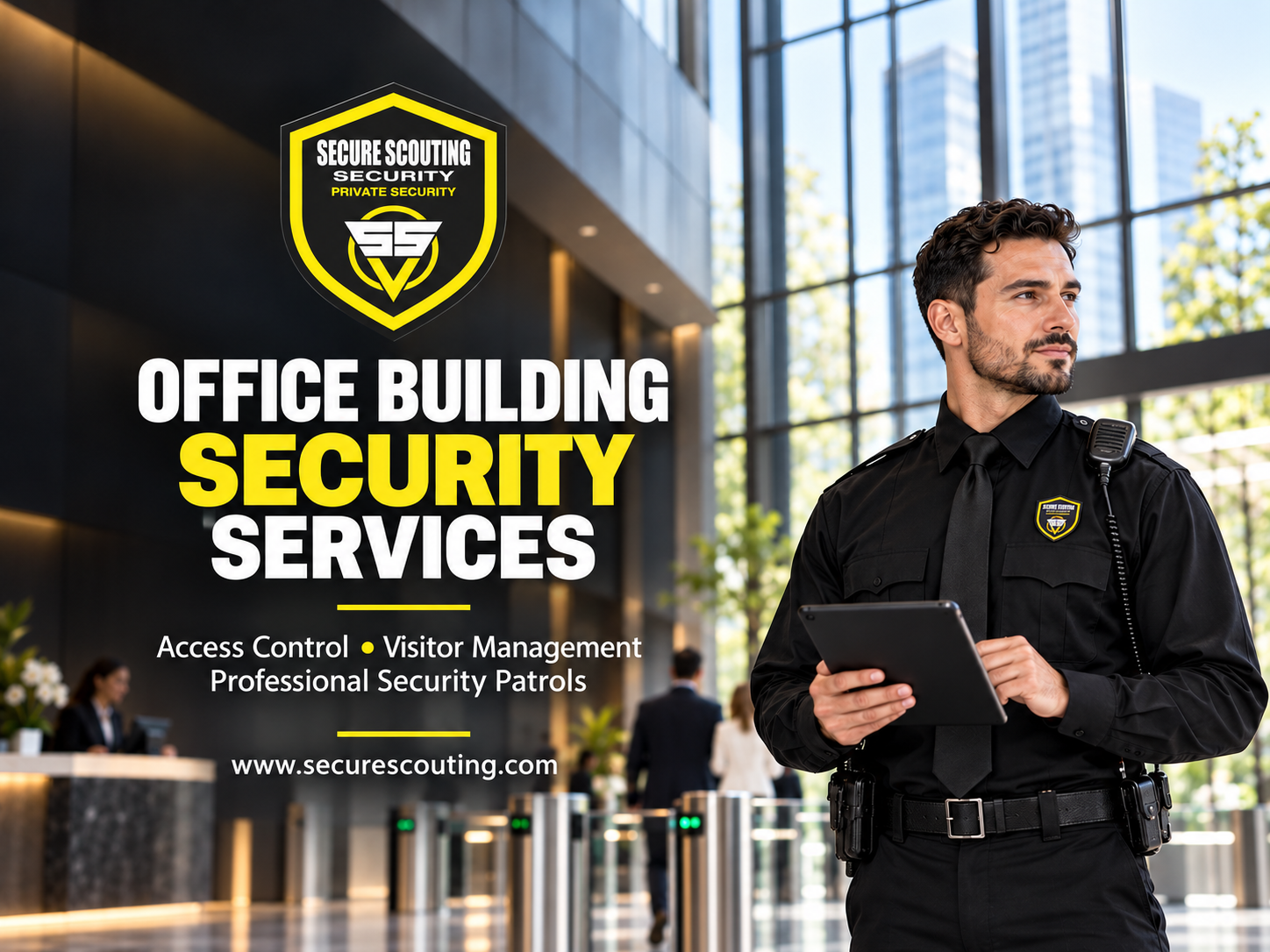
Office Building Security Services: A Guide for Property Managers
Office building security services help commercial property managers control access, monitor activity, and respond to concerns throughout the working day and after closing. From welcoming visitors at the lobby to checking entrances overnight, professional security officers support an organized workplace.
Every office property operates differently. A single-company headquarters may need employee access verification and evening patrols. A multi-tenant building may require visitor check-in, delivery procedures, parking coverage, and coordination with several tenant representatives.
Secure Scouting Inc. provides security services for commercial properties in California and Texas, with coverage tailored to building operations, site conditions, and client requirements.
Why Office Buildings Need Professional Security
An office building receives more than employees and scheduled guests. Maintenance crews, delivery drivers, vendors, and contractors may also need entry throughout the day.
Without clear procedures, it can become difficult to distinguish authorized activity from a security concern. An unattended entrance, a propped-open service door, or an unverified contractor can create an avoidable access problem.
Professional security officers help management address:
- Unauthorized access to offices and restricted areas.
- Theft of equipment, deliveries, and personal belongings.
- Unsecured entrances and damaged access equipment.
- Suspicious activity in parking lots and garages.
- Disruptive behavior in lobbies and shared spaces.
- Unapproved contractor visits after business hours.
Effective coverage combines visible officers, clear instructions, reliable equipment, and communication with property management.
What Do Office Building Security Services Include?
Lobby Security and Visitor Management
The lobby sets the tone for the entire building. Security officers should provide a professional welcome while following the property’s entry procedures.
Their responsibilities may include confirming appointments, contacting tenant representatives, maintaining visitor records, and issuing visitor badges. Officers can also direct guests to approved waiting areas and observe attempts to follow authorized occupants through controlled doors.
For example, an unexpected visitor requesting access to a tenant’s office should be verified through an approved contact before entry is granted. A consistent process helps officers handle these situations fairly and professionally.
Office Access Control
Access control determines who may enter the property, when they may enter, and which areas they can use.
Security officers can verify credentials, check contractor approvals, and monitor designated entrances. They can also report lost access cards, malfunctioning readers, damaged locks, and doors that fail to close properly.
Written procedures should address:
- Employee and visitor entry.
- Temporary badges and forgotten credentials.
- Cleaning and maintenance schedules.
- Restricted rooms and tenant-only areas.
- Contractor authorization.
- After-hours access requests.
For properties with several tenants, management should establish a clear process for approving access exceptions.
Interior and Exterior Patrols
A staffed lobby provides coverage at one location. Patrols help officers observe conditions elsewhere on the property.
Depending on the service plan, patrol routes may include hallways, stairwells, exterior walkways, service corridors, loading areas, and authorized vacant suites.
Officers can check designated doors, observe unusual activity, and document visible damage or maintenance concerns. Patrol findings give management an opportunity to address issues before they become recurring problems.
Properties that need scheduled visits can also explore security patrol services as part of their coverage plan.
Parking Lot and Garage Security
Parking facilities deserve attention during morning arrivals, evening departures, and overnight hours.
Security officers can observe pedestrian and vehicle activity, patrol designated areas, and report damaged gates, inadequate lighting, or blocked access routes. Where included in the service agreement, officers may provide employee escorts to parked vehicles.
Coverage should account for garage levels, pedestrian entrances, tenant schedules, and areas with limited visibility.
CCTV Monitoring
Cameras can support security operations by helping officers observe designated areas and assess reported concerns.
A monitoring plan should identify which cameras are watched, what activity requires action, and whom officers must notify. It should also establish how equipment faults and incidents are recorded.
For buildings considering this service, camera monitoring can complement on-site officers and established access procedures.
Visitor logs and surveillance information should be handled under the property’s approved privacy and retention policies.
After-Hours Office Security
A building may remain active long after regular office hours. Employees working late, cleaning crews, and scheduled contractors may still require authorized access.
After-hours coverage can include entrance checks, patrols, access verification, and response to alarms according to site instructions. Officers can also notify designated contacts when an incident requires a management decision.
For example, a contractor arriving outside an approved schedule should be verified through the agreed authorization process before receiving access.
How Security Officers Support Emergency Procedures
Security officers should understand their assigned role during an alarm, evacuation, medical incident, or other emergency.
Depending on their training and the property’s procedures, responsibilities may include contacting emergency services, notifying management, directing occupants toward designated exits, and helping responders locate the reported incident.
Property managers can review OSHA’s emergency action planning guidance when developing workplace emergency procedures. It explains the importance of site-specific planning and clearly assigned responsibilities.
Security post orders should align with the building’s emergency plan so officers and tenant representatives understand how to communicate and coordinate.
Dedicated Guards or Mobile Patrol: Which Fits Your Building?
The right arrangement depends on how often your property needs an officer present.
| Coverage option | When it may be appropriate |
|---|---|
| Dedicated lobby officer | Buildings with frequent visitors and controlled entry |
| Dedicated patrol officer | Larger properties requiring regular checks across multiple areas |
| Scheduled mobile patrol | Properties needing periodic checks during agreed service windows |
| After-hours officer | Buildings with overnight activity or a need for continuous presence |
| Combined coverage | Properties needing lobby staffing during the day and a different arrangement overnight |
A mobile patrol officer visits according to the service agreement. A dedicated officer remains assigned to the property during scheduled hours. Understanding that difference helps management select coverage that matches its expectations.
Unarmed or Armed Office Security Guards?
The choice should follow a site-specific review of security concerns, duties, and operating conditions.
Unarmed security guards can perform responsibilities such as visitor management, access verification, patrols, observation, reporting, and assistance with building procedures.
Where an assessment identifies a need for armed coverage, management should discuss that requirement with the security provider and define appropriate responsibilities.
The decision should reflect the property’s circumstances, tenant needs, and approved security plan.
How Much Do Office Building Security Services Cost?
Pricing depends on the amount and type of coverage required. A building needing one lobby officer during business hours has different staffing requirements from a property requiring multiple officers around the clock.
Factors that affect a quote include:
- Property location and service schedule.
- Number of officers and coverage hours.
- Armed or unarmed assignments.
- Patrol responsibilities and property size.
- Supervision and reporting expectations.
- Required equipment and vehicle use.
- Assignment duration and start date.
To receive a useful estimate, provide the security company with the property address, operating hours, approximate visitor volume, and main concerns. Clearly defined duties make proposals easier to compare.
What Should a Good Office Security Plan Include?
Clear Post Orders
Post orders are the written instructions officers follow at your building. They should explain visitor procedures, patrol routes, restricted areas, reporting requirements, and escalation contacts.
An officer should know who can approve an unexpected vendor, what to do when a door will not secure, and whom to call after hours.
Reliable Reporting
Daily activity logs and incident reports should provide clear, factual information. Useful reports identify the time, location, observations, actions taken, and people notified.
Recurring findings deserve follow-up. Repeated reports about a broken entrance latch, for example, should prompt a repair and confirmation that the issue has been resolved.
Consistent Tenant Communication
Tenants need to understand the procedures that affect their staff and visitors. Changes to access hours, delivery rules, or emergency contacts should reach both the security team and tenant representatives.
Management should also identify how tenants can report concerns and request authorized access changes.
Regular Reviews
Security needs change when occupancy, operating hours, or building use changes. Review the service plan after significant incidents, tenant transitions, renovations, or recurring access problems.
A review helps keep staffing and instructions aligned with current conditions.
A Practical Checklist for Office Property Managers
Before requesting office building security services, review these questions:
- Which entrances require monitoring?
- How are visitors and contractors approved?
- Are there recurring problems with doors or access cards?
- When do employees arrive and leave?
- Does the parking facility need separate attention?
- Who can authorize entry after hours?
- What reports should management receive?
- Are emergency contacts and procedures current?
These answers help turn a general request for security into a clear scope of work.
Office Building Security Services from Secure Scouting Inc.
Secure Scouting Inc. works with commercial clients in California and Texas to develop security coverage around property operations and site requirements.
Office security coverage can combine lobby staffing, access control, patrols, parking area monitoring, and after-hours assignments. Our 24/7 dispatch supports communication and coordination when assistance is needed.
Explore our commercial security services to learn more about coverage for business properties.
Frequently Asked Questions
What are office building security services?
Office building security services provide personnel and procedures to help manage entry, monitor designated areas, conduct patrols, document incidents, and support property operations.
Can security officers manage visitors and deliveries?
Yes. Assigned duties can include verifying appointments, contacting tenant representatives, maintaining visitor records, and following approved delivery procedures.
Does every office building need 24/7 security?
Coverage should match the property’s activity and identified needs. Some buildings require business-hours staffing, while others need evening, overnight, or continuous coverage.
Can security coverage work with existing cameras and access systems?
Yes, subject to system capabilities, permissions, and the agreed scope of work. Officers need appropriate training and clear instructions for the equipment they use.
Can services be customized for multi-tenant office buildings?
Yes. A service plan can address shared entrances, individual tenant access rules, contractor schedules, parking facilities, and after-hours authorization.
How do I request a security quote?
Provide your property address, desired schedule, expected start date, and main security concerns. Secure Scouting Inc. can discuss the scope and prepare a proposal based on those requirements.
Request Office Building Security Services
Create a security plan that supports your tenants, employees, and daily building operations.
Contact Secure Scouting Inc. to discuss appropriate coverage for your commercial office property.
Phone: (510) 688-3999
Email: [email protected]