
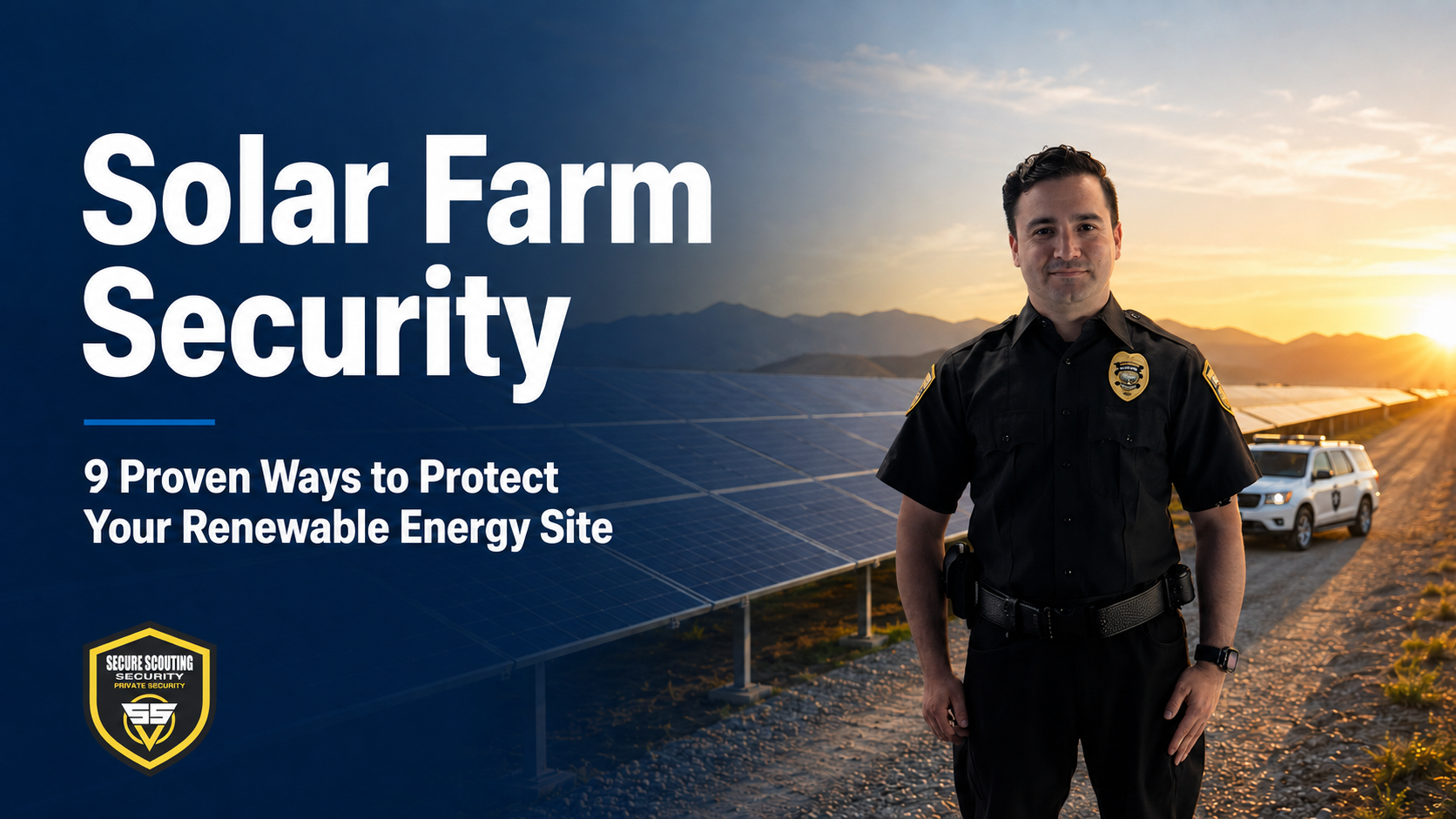
 Solar Farm Security: 9 Proven Ways to Protect Your Renewable Energy Site
Solar farm security is essential for protecting renewable energy facilities, high-value equipment, employees, and ongoing operations. Solar sites are often spread across large areas and may be located far from busy streets or populated neighborhoods. As a result, they can be vulnerable to theft, vandalism, trespassing, and other costly disruptions.
Professional security does more than respond after an incident. It creates a visible deterrent, monitors the property, controls access, and helps protect the investment behind a solar energy project. A customized plan gives owners and operators confidence that their facility is protected day and night.
Why Solar Farms Need Professional Security
Solar farms contain valuable materials and equipment. Copper wiring, solar panels, inverters, batteries, tools, fuel, and construction materials can attract criminals. Even a small theft can stop production, create safety risks, and lead to expensive repairs.
In addition, many facilities have long perimeter fences, multiple entry points, isolated equipment areas, and limited on-site staff. These conditions make it difficult for a single employee or basic alarm system to provide complete coverage. That is why solar farm security should be planned around the specific layout, operating hours, and risk level of the site.
Security also helps operators respond appropriately to visitors, contractors, delivery drivers, and unauthorized individuals. A trained officer can document activity, follow site procedures, and contact the right person when an issue needs attention.
1. Use Visible Security Officers as a Deterrent
A professional, uniformed security officer makes it clear that the property is actively protected. This visible presence can discourage trespassers before damage or theft occurs.
Officers can conduct perimeter checks, inspect gates, monitor critical equipment areas, and look for signs of tampering. They can also report damaged fencing, open access points, suspicious vehicles, or unsafe conditions. Regular patrols make it harder for someone to study the property without being noticed.
For higher-risk locations, armed security may be appropriate when supported by a proper risk assessment and local requirements. For many sites, unarmed officers and mobile patrols provide an effective, professional solution.
2. Control Access at Every Entry Point
Access control is one of the strongest ways to protect a renewable energy facility. Every vehicle, contractor, employee, and visitor should enter through an approved process.
Security personnel can verify identification, maintain visitor logs, check delivery information, and confirm that contractors are authorized to be on site. They can also help enforce rules for keys, badges, gates, and restricted zones.
Clear access procedures protect the facility while keeping daily operations organized. They also create records that are useful if an incident occurs later.
3. Schedule Consistent Mobile Patrols
Mobile patrols are a practical choice for large properties or sites that do not need a full-time officer at every location. A marked patrol vehicle can make routine checks throughout the day, overnight, or at irregular times.
During each patrol, the officer can inspect the perimeter, gates, equipment storage, parking areas, and control rooms. Patrol officers can also verify that lights and cameras are functioning and report anything that needs maintenance.
Randomized patrol times are especially helpful. They make the security pattern less predictable and strengthen the deterrent effect of solar farm security.
4. Combine Guards With Video Monitoring
Technology is most effective when it supports a clear response plan. CCTV cameras, solar-powered mobile camera units, motion detection, and remote monitoring can extend visibility across a large site.
However, cameras alone may not stop an intruder. A trained security team can review alerts, verify the situation, dispatch an officer, contact site management, and call law enforcement when needed. This combination can help limit loss and speed up response times.
Camera placement should cover gates, fence lines, equipment compounds, storage areas, and other vulnerable locations. Good lighting and clear signage further improve the system’s effectiveness.
5. Protect High-Value Equipment and Materials
Solar panels and related equipment are major assets. During construction, replacement parts, tools, cable, and fuel may also be stored on site. These areas need extra attention.
Security officers can inspect locks, storage containers, equipment yards, and material staging areas during each shift. They can check for forced entry, missing items, broken seals, or unauthorized activity. When concerns are found early, the site can take action before a small problem becomes a large loss.
Asset protection should be part of the post orders given to every officer. Clear instructions help ensure that critical areas receive consistent attention.
6. Strengthen Perimeter Security
The perimeter is the first line of defense. Fencing, gates, warning signs, lighting, landscaping, and surveillance should work together to make unauthorized entry more difficult.
Officers should inspect fence lines regularly, especially after storms, construction activity, or reported alarms. They should document gaps, damaged locks, cut fencing, and blind spots. Prompt repairs prevent weak points from becoming an easy entry route.
Solar farm security plans should also identify nearby roads, trails, neighboring properties, and other places from which intruders might approach. This helps management focus resources where they are needed most.
7. Maintain Clear Incident Reports
Accurate reporting is an important part of professional security. Daily activity reports show the patrols completed, visitors checked in, and conditions observed. Incident reports record unusual events, property damage, safety concerns, or suspected criminal activity.
These reports provide management with useful information. They can reveal repeated issues, help support insurance claims, and document the actions taken by the security team. They also create accountability across every shift.
A reliable security provider should communicate important incidents quickly and provide complete documentation after the event.
8. Prepare for Emergencies and Safety Risks
Solar facilities can face more than crime. Severe weather, fire hazards, damaged electrical equipment, medical emergencies, and unauthorized vehicles may require an immediate response.
Security officers should know the site’s emergency contacts, evacuation routes, reporting procedures, and rules for working around electrical systems. They should never take actions outside their training. Instead, they should secure the area, notify the appropriate personnel, and assist emergency responders according to the site’s procedures.
An emergency-ready security program helps protect people, property, and operations when unexpected situations arise.
9. Choose a Customized Security Plan
No two solar sites have the same risks. A construction-phase project may need overnight guards, material-yard checks, and contractor access control. An operating facility may need mobile patrols, camera monitoring, gate management, and detailed reporting.
Before selecting a provider, ask for a site assessment. The assessment should review the size of the property, current security measures, valuable assets, operating schedule, access points, nearby activity, and past incidents. From there, the provider can recommend the right mix of officers, patrols, technology, and reporting.
The best solar farm security plan is practical, scalable, and easy for site management to oversee. It should reduce risk without interrupting the work that keeps the facility producing clean energy.
Frequently Asked Questions About Solar Farm Security
What security services are best for a solar farm?
Most solar facilities benefit from a mix of access control, uniformed security officers, mobile patrols, video monitoring, perimeter inspections, and incident reporting. The right services depend on the site’s size, location, operating hours, and current risks.
Do solar farms need 24/7 security?
Not every location needs a full-time officer around the clock. However, sites with valuable equipment, repeated theft concerns, active construction, or a remote location may benefit from 24/7 coverage. A security assessment can identify the appropriate level of protection.
Can security guards help prevent copper theft?
Yes. Visible patrols, perimeter inspections, access control, camera monitoring, and fast reporting can make copper theft more difficult and improve the chance of detecting suspicious activity early.
Protect Your Solar Farm With Secure Scouting
Secure Scouting provides professional security solutions for commercial and industrial properties throughout California and Texas. Our team can help solar farm owners, contractors, and operators protect their sites with trained security officers, mobile patrols, access control, live video monitoring, and clear daily reporting.
Contact Secure Scouting today to discuss a customized security plan for your solar facility. We are available 24/7 to help protect your people, equipment, and renewable energy investment.
Phone: (510) 688-3999
Email: [email protected]
Website: www.securescouting.com
Let Secure Scouting Inc. help protect your guests, staff, venue, and event so everyone can focus on a safe and memorable experience.