
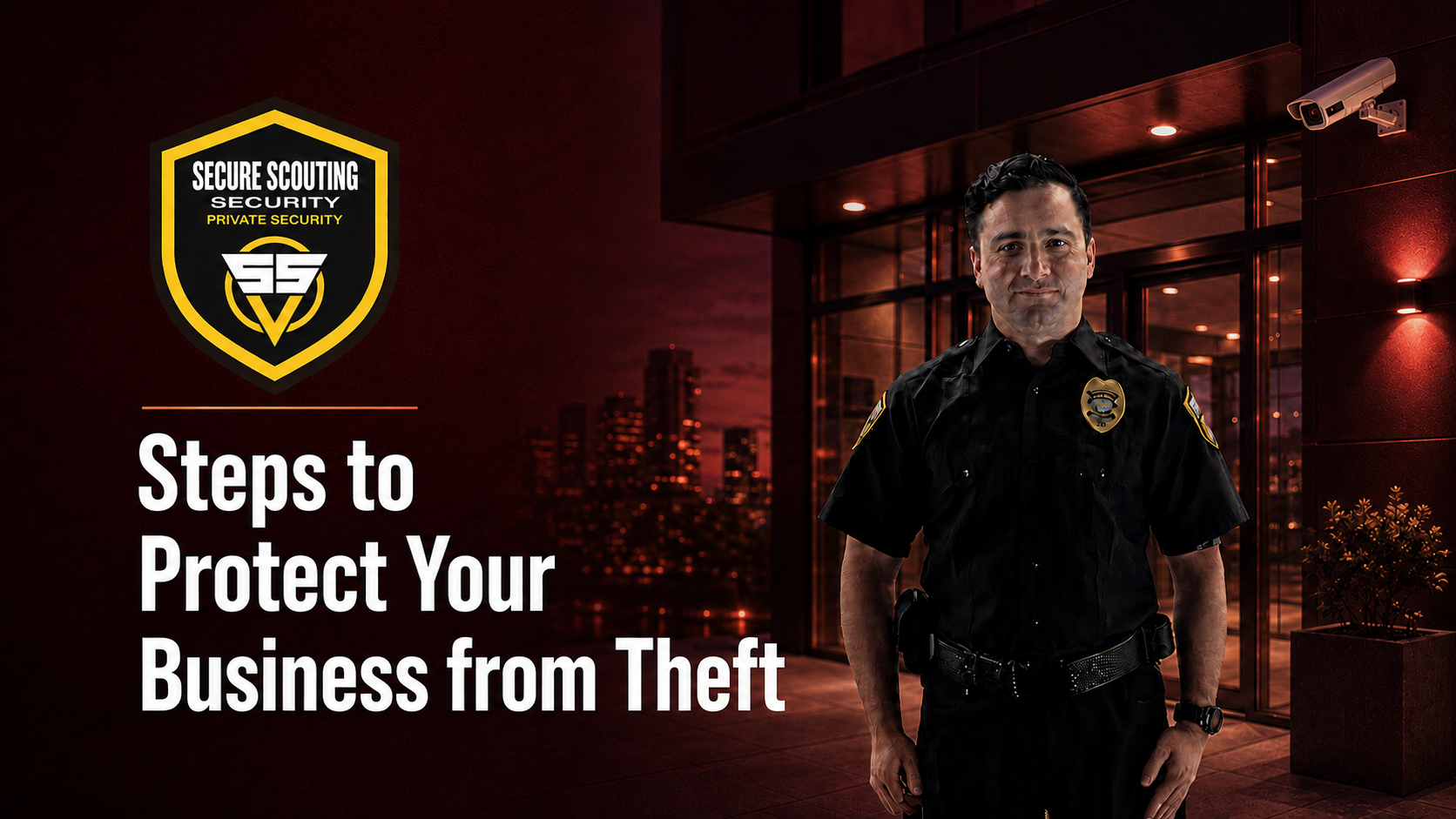
Steps to Protect Your Business from Theft
Theft can affect nearly any business, regardless of its size or industry. Retail stores may experience shoplifting, warehouses can lose valuable inventory, construction sites are frequent targets for equipment theft, and offices may face the unauthorized removal of computers, documents, or confidential information.
The consequences often extend beyond the value of stolen property. Theft can interrupt operations, delay projects, increase insurance costs, reduce employee confidence, and damage a company’s reputation. Taking practical steps to protect your business from theft helps reduce these risks before an incident occurs.
A strong security plan combines trained personnel, physical protection, technology, employee awareness, and clear procedures. The following recommendations can help protect your business from both internal and external theft.
Steps to Protect Your Business from Theft
Every property has different risks, so the right security plan should match your operating hours, location, assets, employee activity, and history of incidents. These steps to protect your business from theft create a layered approach that makes unauthorized access and theft more difficult.
1. Conduct a Complete Security Assessment
The first step is understanding where your business is most vulnerable. Walk through the property during business hours and after closing to identify areas where theft could occur without being noticed.
Your assessment should examine:
- Doors, windows, gates, and loading areas
- Parking lots and exterior walkways
- Storage rooms and restricted areas
- Lighting conditions
- Alarm and surveillance coverage
- Inventory-handling procedures
- Delivery and receiving areas
- Employee and visitor access
- Previous thefts or suspicious incidents
Review who has access to keys, access cards, alarm codes, valuable equipment, and sensitive information. A professional security assessment can identify weaknesses that may be overlooked during everyday operations.
One of the most important steps to protect your business from theft is reviewing these risks regularly instead of waiting for a loss to occur.
2. Improve Lighting Around the Property
Poorly lit areas can provide cover for theft, trespassing, vandalism, and other unwanted activity. Install reliable lighting near entrances, exits, parking lots, alleys, loading docks, storage areas, and the property perimeter.
Lights should eliminate dark corners without creating glare that reduces camera visibility. Motion-activated lighting can also draw attention to activity after hours.
Check exterior lights regularly and replace damaged or burned-out fixtures promptly. Good lighting improves visibility for employees, customers, security guards, and surveillance cameras while making the property less attractive to potential offenders.
3. Strengthen Doors, Windows, Gates, and Fences
Physical barriers are an important part of theft prevention. Doors should have commercial-grade locks, reinforced frames, and properly functioning closing mechanisms. Windows in vulnerable locations may require security film, protective grilles, or additional locking devices.
Businesses with outdoor equipment, vehicles, or construction materials should inspect fences and gates frequently. Repair openings, loose sections, damaged locks, or areas that can be easily climbed.
Avoid leaving ladders, pallets, dumpsters, or large objects near fences or buildings, as they may help someone gain unauthorized access. Strong physical security makes forced entry more difficult and gives alarms, guards, or law enforcement additional time to respond.
Improving physical barriers is one of the most effective steps to protect your business from theft, especially at warehouses, construction sites, and commercial properties with outdoor assets.
4. Install and Maintain Surveillance Cameras
Security cameras can discourage theft, monitor activity, and provide useful evidence following an incident. Cameras should cover important areas such as:
- Main entrances and exits
- Cash-handling locations
- Storage rooms
- Loading docks
- Parking lots
- Equipment yards
- Hallways leading to restricted areas
- Areas containing valuable inventory
Use cameras that provide clear images under the lighting conditions at your property. Position them carefully to reduce blind spots and protect recording equipment from tampering.
Cameras should be inspected and tested regularly. A camera that is blocked, disconnected, or not recording provides only the appearance of protection. Businesses should also establish appropriate policies for accessing, retaining, and reviewing surveillance footage.
For additional resources, review CISA physical security guidance, which provides information and tools for improving physical-security preparedness.
5. Use Professional Security Guards
Technology is valuable, but it cannot replace the judgment and immediate response of a trained security officer. A professional security guard can patrol the property, observe suspicious behavior, verify access, respond to alarms, and document incidents.
The visible presence of a uniformed guard may discourage individuals from targeting the property. Guards can also identify unsecured doors, damaged fencing, poor lighting, unusual vehicles, and other warning signs during their patrols.
Depending on the property’s needs, a business may use:
- Armed or unarmed security guards
- Foot patrols
- Vehicle patrols
- Gate and access-control officers
- Lobby security
- After-hours security
- CCTV monitoring personnel
Professional guard coverage is one of the most responsive steps to protect your business from theft because officers can observe conditions and act according to established procedures in real time.
6. Control Access to Restricted Areas
Not every employee, customer, contractor, or visitor needs access to every area of a business. Restrict access to inventory rooms, offices, equipment areas, server rooms, cash-handling locations, and other sensitive spaces.
Access-control measures may include:
- Employee identification badges
- Electronic access cards
- Visitor sign-in procedures
- Key-control logs
- Security guards at entrances
- Contractor verification
- Temporary visitor passes
- Alarmed emergency exits
Review access permissions regularly, especially when an employee changes positions or leaves the company. Keys, access cards, uniforms, and company devices should be returned immediately when employment or a contractor relationship ends.
Access control is one of the practical steps to protect your business from theft because it limits opportunities for unauthorized individuals to reach valuable property.
7. Protect Inventory and Valuable Equipment
Businesses should maintain accurate records of merchandise, tools, machinery, electronics, and other valuable assets. Inventory counts should be conducted regularly, and unexpected shortages should be investigated promptly.
Consider using serial-number records, barcode systems, asset tags, GPS devices, or other tracking methods for valuable equipment. High-value merchandise should be stored in secured areas with limited access.
Construction companies should avoid leaving tools and portable equipment unattended overnight. When removal is not practical, equipment should be placed in secured containers or designated areas covered by lighting, cameras, and security patrols.
Accurate records and secure storage are important steps to protect your business from theft because they make missing assets easier to identify and investigate quickly.
8. Secure Deliveries and Loading Areas
Loading docks and receiving areas can become major theft points because inventory frequently moves through them. Establish procedures for verifying deliveries, recording vehicle information, and confirming who is authorized to collect or receive goods.
Separate receiving responsibilities when practical so that one person does not control every stage of the process. Compare purchase orders, delivery records, and inventory counts to identify missing or unauthorized items.
Security guards can monitor loading areas, verify driver credentials, record vehicle movements, and prevent unauthorized individuals from entering warehouses or storage spaces.
9. Train Employees to Recognize Suspicious Activity
Employees often notice problems before management or security personnel. Train staff members to recognize and report suspicious conduct without placing themselves in danger.
Employees should know how to report:
- Unknown people in restricted areas
- Unusual interest in security procedures
- Doors being intentionally left unlocked
- Missing products or equipment
- Suspicious vehicles
- Attempts to avoid visitor procedures
- Repeated alarm or access-code problems
- Threats or aggressive behavior
Employees should never be instructed to physically confront a suspected thief unless their specific professional role and training authorize it. Their safety must remain the priority. They should observe, move to a safe location, and notify security, management, or law enforcement according to company procedures.
Employee awareness supports other steps to protect your business from theft by helping management respond to concerns before they become larger losses.
10. Reduce the Risk of Internal Theft
Not all theft comes from outside the business. Internal theft can involve inventory, cash, equipment, confidential information, time records, or misuse of company accounts.
Businesses can reduce internal risks by creating accountability and separating important responsibilities. Useful controls may include:
- Background screening consistent with applicable laws
- Accurate inventory records
- Limited access to financial systems
- Dual approval for sensitive transactions
- Regular audits
- Key and access-card tracking
- Clear cash-handling procedures
- Confidential reporting channels
- Consistent enforcement of company policies
Security measures should be applied fairly and respectfully. Employees should understand company policies, prohibited conduct, and the process for reporting suspected theft.
11. Establish Opening and Closing Procedures
Opening and closing times can create additional risks because fewer employees may be present. Create a written checklist for the employees responsible for these duties.
Closing procedures may include:
- Confirming that customers and visitors have left
- Checking restrooms, storage rooms, and other spaces
- Securing doors, windows, and gates
- Activating alarms
- Protecting cash and valuable items
- Inspecting the exterior for suspicious activity
- Reporting damaged locks or security equipment
Whenever possible, avoid requiring an employee to close a high-risk property alone. Security escorts or guard coverage can provide added protection during late-night hours.
Written opening and closing procedures are valuable steps to protect your business from theft because they help ensure that no important security task is missed.
12. Develop a Security Incident Response Plan
Employees and managers should know what to do if theft or suspicious activity occurs. A clear response plan reduces confusion and helps preserve important information.
The plan should explain:
- Who must be notified
- When to call law enforcement
- How to protect employees and customers
- How to preserve surveillance footage
- How to secure the affected area
- Who prepares the incident report
- How losses are documented
- Who communicates with insurers or investigators
After an incident, review what happened and determine whether changes are needed in staffing, training, lighting, access control, cameras, or other security measures.
You can also review physical security planning best practices when strengthening policies and procedures.
13. Review and Update Your Security Plan
Security risks change as a business grows, changes locations, adds employees, extends operating hours, or purchases new equipment. A security plan should therefore be reviewed regularly.
Use incident reports, patrol logs, inventory shortages, employee concerns, and camera observations to identify patterns. Even incidents that appear minor may reveal a larger weakness when they repeatedly occur in the same location or during the same hours.
Regular reviews are essential steps to protect your business from theft because risks, assets, and access needs can change over time.
Use a Layered Approach to Business Security
No single security measure can eliminate every risk. Cameras can record activity, but they cannot stop a theft in progress. Locks can restrict access, but they may be defeated or misused. Employees can report suspicious activity, but they should not be expected to manage dangerous situations.
A layered security strategy combines:
- Trained security personnel
- Strong physical barriers
- Effective lighting
- Surveillance and alarm technology
- Controlled access
- Employee training
- Accurate documentation
- Clear response procedures
When these protections support one another, the business becomes a more difficult and less attractive target. Combining these steps to protect your business from theft creates stronger protection than relying on only one security measure.
Protect Your Business With Secure Scouting Inc.
Secure Scouting Inc. provides customized security solutions for commercial properties throughout California. We serve warehouses, construction sites, commercial buildings, retail properties, offices, healthcare facilities, residential communities, special events, and other locations that require professional protection.
Our services include armed and unarmed security guards, mobile patrols, access control, CCTV monitoring, fire watch, and detailed activity and incident reporting. Our team works with each client to understand the property, identify security concerns, and develop an appropriate protection plan.
Do not wait for a theft to reveal weaknesses in your security. Contact Secure Scouting Inc. today to discuss customized steps to protect your business from theft.
Phone: (510) 688-3999
Email: [email protected]
Website: www.securescouting.com
One Response
Informative