
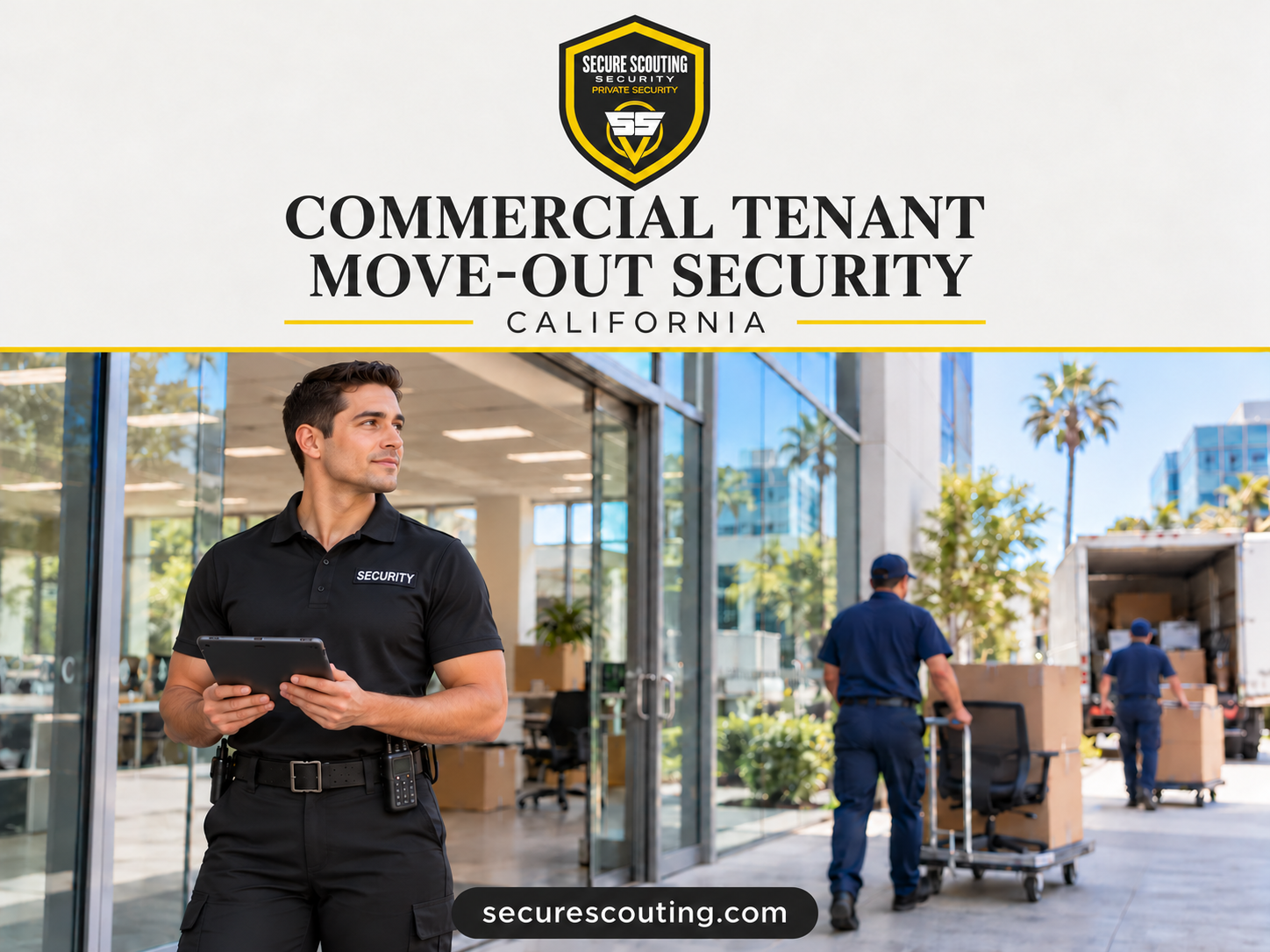
Trusted Commercial Tenant Move-Out Security in California
Commercial tenant move-out security in California helps property managers oversee access, monitor moving activity, and protect business properties during tenant transitions. When moving crews arrive, loading doors stay open, and equipment leaves the building, a clear security plan helps keep the process organized.
A commercial move-out can affect more than the departing tenant. Neighboring businesses, shared entrances, parking areas, and building equipment may also need attention. Security coverage provides a designated point of contact for access checks, observations, and incident reporting.
Secure Scouting Inc. provides commercial security services tailored to property conditions, operating hours, and management instructions. Whether a tenant is leaving an office suite, retail unit, or warehouse, coverage can support the move and the vacancy that follows.
Why Commercial Tenant Move-Out Security Matters
A move-out changes a building’s usual routines. Unfamiliar workers may arrive, vehicles may occupy loading areas, and employees may carry furniture or inventory through shared spaces.
Without clear procedures, management may find it difficult to confirm who belongs on the property or whether particular removal activities have approval.
Common concerns include:
- Unauthorized entry through open doors or gates.
- Removal of equipment without management confirmation.
- Moving crews entering restricted spaces.
- Unsecured entrances after work ends.
- Disruption to neighboring tenants.
- Suspicious activity once the unit becomes vacant.
Commercial tenant move-out security in California helps address these concerns through visible oversight, written instructions, and timely communication with property management.
Properties That Can Benefit From Move-Out Security
Move-out coverage can support a range of commercial properties:
- Office buildings: Monitor entrances, service elevators, and shared corridors.
- Retail properties: Oversee storefront access and scheduled loading activity.
- Warehouses: Monitor loading bays, gates, and equipment removal.
- Industrial facilities: Observe contractor access and restricted areas.
- Business parks: Support tenant transitions while other businesses remain open.
- Commercial storage properties: Monitor vehicle access and movement through designated areas.
Coverage should reflect the property’s layout and activity. A single office suite may need one officer during moving hours, while a larger facility may require separate entrance and loading-area posts.
Access Control During a Commercial Tenant Move-Out
Confirm Approved Movers and Contractors
Before moving begins, property management should provide the security team with approved contacts, moving companies, work schedules, and entry instructions.
Security officers can check arriving personnel against that information, maintain sign-in records, and contact management when authorization is unclear.
A practical access plan identifies:
- Approved entrances and exits.
- Moving dates and working hours.
- Authorized tenant and contractor representatives.
- Areas crews may access.
- Procedures for unexpected visitors.
- The person responsible for approving exceptions.
These instructions help officers respond consistently throughout the assignment.
Monitor Restricted Areas
Permission to enter a departing tenant’s space should not automatically allow access to neighboring suites, equipment rooms, rooftops, or other controlled areas.
Officers can observe designated access points, direct visitors, and report attempts to enter areas outside the approved moving route.
Monitoring Equipment and Property Removal
Commercial moves may involve computers, furniture, machinery, shelving, and inventory. Some items may belong to the tenant, while others may be building fixtures or another business’s property.
Management should establish a written approval process before removal begins.
Depending on the assignment, security officers can:
- Compare removal activity with an approved list.
- Record relevant vehicle and moving-company details.
- Contact the designated representative about unclear items.
- Document exceptions and management instructions.
- Report suspicious activity promptly.
Officers should follow written directions rather than decide ownership disputes. Questions about fixtures, abandoned property, or contested equipment should be referred to management and its appropriate advisers.
Loading Area and Parking Oversight
Loading docks and parking areas can become busy when moving trucks share space with deliveries, employees, and customers.
Commercial tenant move-out security in California can include oversight of designated loading locations and vehicle access points.
Officers may monitor truck arrivals, direct drivers to approved areas, and report blocked entrances or unsafe conditions. They can also observe doors that remain open during loading and notify management when moving activity extends beyond the scheduled hours.
The site plan should keep moving activity organized around ongoing business operations and established emergency access routes.
Protecting Neighboring Tenants and Shared Spaces
A tenant departure should account for businesses that remain on the property.
Moving crews may use shared lobbies, corridors, elevators, and parking areas. Security officers can monitor these spaces and direct personnel along management-approved routes.
For example, management may authorize a crew to use a service entrance and freight elevator while keeping the main lobby available for other tenants.
Clear boundaries help reduce unnecessary disruption and make unusual activity easier to identify.
Incident Reporting and Move-Out Documentation
Useful security reports describe what officers observed, when it happened, and whom they notified.
Depending on the agreed scope, documentation may include:
- Access exceptions and approvals.
- Doors or gates found unsecured.
- Observed damage in monitored areas.
- Unauthorized entry attempts.
- Moving activity outside approved hours.
- Conditions found during closing checks.
Where authorized, photographs can support written reports. Officers should document observations objectively and avoid unsupported conclusions about who caused damage.
Security reports supplement the property manager’s inspection and formal handover process.
After-Hours Security Following the Move
Security needs may continue after the last moving truck leaves.
A unit may remain vacant while cleaners, maintenance workers, or renovation contractors complete their work. Keys or access credentials may also need management attention.
An agreed closing procedure can include checking designated entrances, confirming remaining personnel, and reporting unresolved access concerns.
For properties entering a longer vacancy, vacant property security can provide continued oversight through an appropriate combination of patrols and on-site coverage.
Choosing Commercial Tenant Move-Out Security in California
The appropriate security arrangement depends on the site’s layout, moving activity, remaining assets, and coverage hours.
On-site officers provide continuous oversight during their scheduled assignment. This can be useful when crews need frequent access checks or management expects substantial equipment movement.
Multiple posts may be appropriate when separate gates, entrances, or loading bays require simultaneous attention.
Mobile patrols provide periodic checks and may suit some properties after moving activity ends. They do not provide continuous observation between visits.
When selecting a provider, businesses can check company licensing and individual guard registration through the California Bureau of Security and Investigative Services license verification page.
Commercial Move-Out Security Checklist
Prepare the following information before coverage begins:
- Schedule: Moving dates, working hours, and expected completion time.
- Authorized contacts: Tenant representatives, movers, contractors, and property managers.
- Access instructions: Approved entrances, loading locations, and restricted areas.
- Removal procedures: Who approves equipment releases and handles questions.
- Reporting requirements: Required logs, photographs, and notification procedures.
- Closing instructions: Door checks, remaining personnel, and unresolved concerns.
- Vacancy arrangements: Coverage needed after the tenant leaves.
Share schedule changes promptly so the security plan remains aligned with actual activity.
Frequently Asked Questions
What is commercial tenant move-out security?
It is security coverage arranged around a commercial tenant’s departure. Duties may include access checks, loading-area monitoring, patrols, and reporting under property management’s written instructions.
Can security officers monitor equipment removal?
Yes. Officers can observe and document removal activity, follow an approved release procedure, and contact management when an item’s authorization is unclear.
Does every commercial move-out require overnight security?
No. Overnight coverage depends on the property’s access conditions, remaining assets, activity, and expected vacancy. Management should select coverage based on the site’s needs.
Can security continue after the tenant leaves?
Yes. Move-out coverage can transition into patrols or on-site security while the property awaits repairs, leasing, or a new occupant.
Is move-out security the same as eviction enforcement?
No. Move-out security supports authorized activity and property oversight. A security assignment does not itself authorize removing occupants or changing possession.
Request Commercial Tenant Move-Out Security in California
An organized tenant transition starts with clear access rules, an approved moving schedule, and reliable communication.
Secure Scouting Inc. can help you plan commercial tenant move-out security in California, including entrance monitoring, loading-area oversight, incident reporting, and coverage after the move.
Visit Secure Scouting Inc. to request a free quote, or email [email protected] with your property location, moving dates, and security requirements.