
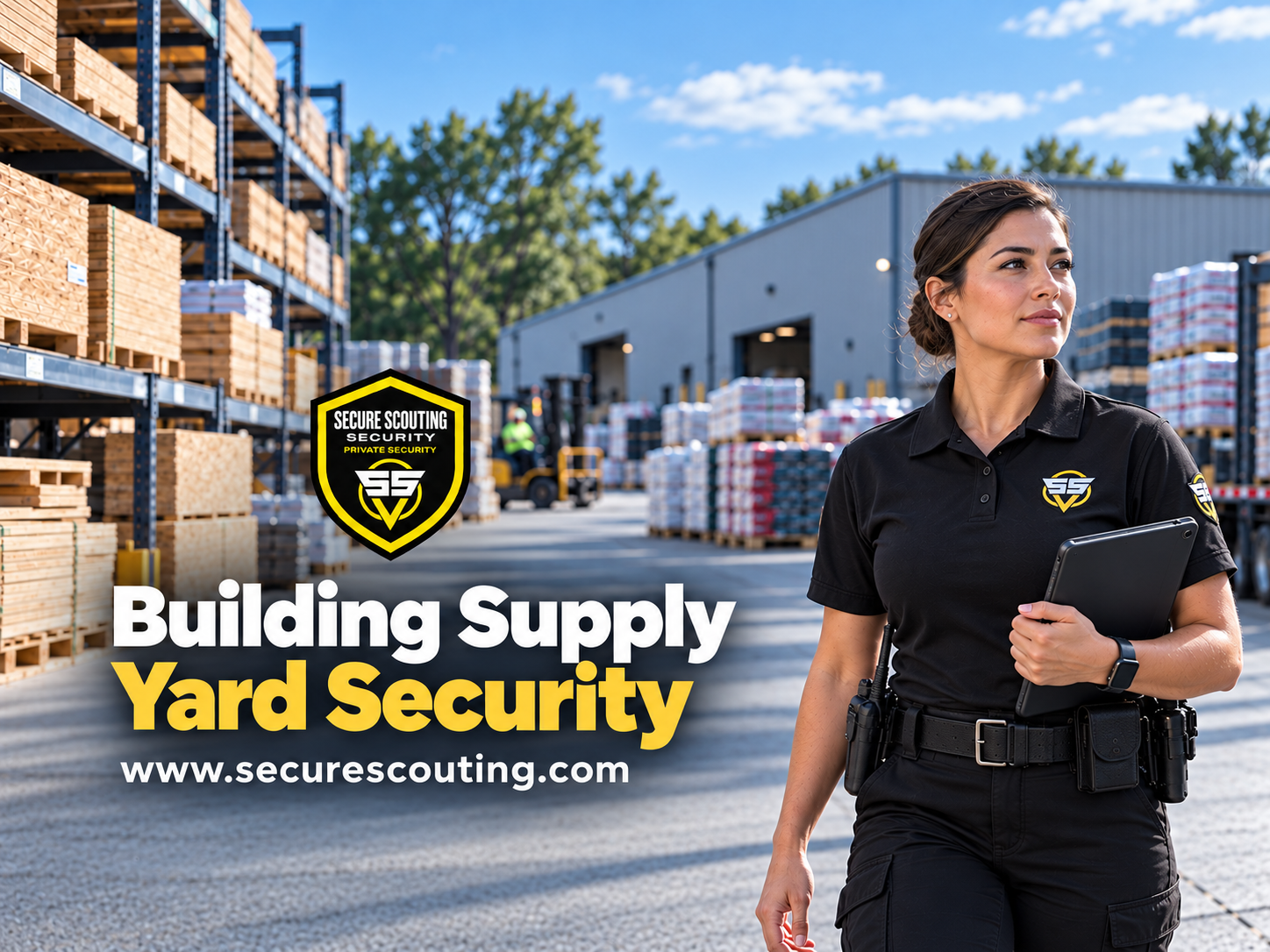
Best Building Supply Yard Security Services in California
Building Supply Yard Security Services help commercial suppliers protect inventory, control property access, and monitor activity during business hours and after closing. With lumber, roofing products, plumbing supplies, and other construction materials stored across large properties, security needs to follow how the yard operates.
Busy contractor pickups, supplier deliveries, and outdoor storage areas can make it difficult to track every person and vehicle. Clear entry procedures and a visible security presence help employees manage these activities while identifying concerns that require attention.
Secure Scouting Inc. (SSI) offers commercial security guards, patrols, and camera monitoring in California. Building supply businesses can discuss a coverage plan based on their layout, operating hours, and security priorities.
Why Building Supply Yards Need Professional Security
Building supply yards combine retail activity, outdoor storage, and distribution operations. Customers may enter with trucks and trailers, while delivery vehicles need access to unloading areas. Employees must serve buyers, move inventory, and supervise material releases throughout the day.
These overlapping activities can create gaps in visibility. An unfamiliar vehicle may enter a restricted lane, a customer may approach the wrong storage area, or someone may attempt to remove materials without confirmed authorization.
Common security concerns include:
- Unauthorized access to lumber and building materials.
- Unverified customer pickups and material releases.
- Trespassing through unsecured gates or damaged fencing.
- Vandalism during overnight and weekend closures.
- Visitors entering employee-only areas.
- Suspicious activity around storage sheds and loading zones.
A practical security plan addresses these concerns while supporting normal business operations.
Building Supply Yard Security Services for Access Control
An organized entrance helps establish who is on the property and why they are there. Security officers can follow your approved procedures for customer access, contractor visits, and supplier deliveries.
Gate duties may include recording vehicle details, confirming appointments with staff, directing visitors to designated areas, and contacting a supervisor when authorization is unclear.
Different visitors may need different access. A customer collecting roofing materials should be directed toward the approved pickup area. A supplier delivering lumber may need to wait until warehouse personnel authorize entry.
Security officers can help maintain these boundaries so that visitors do not move freely through restricted storage sections.
Customer Pickup and Exit Verification
Material-release procedures are particularly important when customers collect products using their own vehicles.
Under the business’s written instructions, an officer can check that the driver has the required release document and refer discrepancies to sales or warehouse staff. Employees responsible for the order should confirm quantities and approve any changes.
For example, if pickup paperwork identifies one order but the load appears inconsistent with that document, the officer can contact the designated supervisor before the vehicle leaves.
This creates a defined verification point and a clear process for resolving questions.
Protecting Lumber and Outdoor Building Materials
Large materials often remain outside because they require substantial storage and handling space. Lumber bundles, fencing panels, masonry products, and roofing supplies may be accessible from open lanes or perimeter boundaries.
Patrol routes should reflect where inventory is stored and how someone could approach it. Officers can observe gates, storage entrances, fence lines, and areas with limited visibility.
Conditions worth reporting include:
- Damaged locks or fencing.
- Open doors outside approved operating hours.
- Unfamiliar vehicles near restricted inventory.
- Signs of unauthorized entry.
- Lighting failures around access points.
For properties that include lumber yard operations, officers can give particular attention to timber storage lanes and loading areas. Patrols should follow site safety rules and remain clear of active forklifts and unstable material stacks.
Security coverage works alongside accurate inventory records, maintained barriers, and consistent release procedures.
Delivery and Loading Area Security
Building supply yards may receive deliveries while contractors are collecting orders. During busy periods, several vehicles can arrive at once, making it harder to distinguish approved activity from an unexpected visit.
A documented delivery process helps employees and security officers work together. It should identify who authorizes access, where drivers wait, and which areas remain restricted.
Security support may include recording arrival times, contacting receiving staff, directing drivers to approved waiting locations, and observing loading areas for unauthorized activity.
If a driver arrives outside the scheduled window or requests access to an unexpected area, the officer can seek approval before allowing entry.
Warehouse personnel remain responsible for receiving products, verifying quantities, and supervising loading. Security officers support access procedures and report concerns to the appropriate contact.
After-Hours Building Supply Yard Security Services
After closing, outdoor inventory and storage buildings remain on the property while employee activity decreases. Gates, perimeter boundaries, and less visible sections become important areas for observation.
After-hours Building Supply Yard Security Services can include dedicated guard coverage, patrol visits, or monitoring supported by an agreed response process.
Closing and overnight duties may include:
- Checking designated gates and storage doors.
- Observing perimeter fencing and access points.
- Patrolling approved inventory areas.
- Recording unusual vehicles or activity.
- Reporting damage and signs of attempted entry.
- Following instructions for authorized overnight deliveries.
SSI’s security patrol services include mobile and foot patrol options with documentation. Businesses can discuss how these services fit their property and coverage schedule.
Patrol visits provide checks at agreed intervals. A business seeking an officer’s continuous presence during specified hours should discuss dedicated on-site coverage.
Camera Monitoring for Building Supply Properties
Cameras can improve visibility around entrances, exits, storage lanes, and perimeter areas. Their usefulness depends on placement, image quality, monitoring arrangements, and the response to observed activity.
Tall lumber stacks and parked delivery trucks can block camera views. Coverage should be reviewed when the yard layout changes or inventory moves into new areas.
Potential camera locations include:
- Main entrances and customer exits.
- Outdoor material storage sections.
- Loading and unloading areas.
- Restricted warehouse doors.
- Rear gates and perimeter access points.
Businesses considering additional surveillance can review SSI’s camera monitoring services.
Before selecting coverage, establish who receives alerts, which hours are monitored, and who responds. Clear responsibilities help connect an observation with an appropriate action.
Incident Reports That Support Management Decisions
Consistent reporting helps managers understand security activity across shifts. An incident report should describe what the officer observed, when and where it happened, and what action followed.
Relevant reports may concern an attempted unauthorized pickup, damaged gate, repeated trespassing, or a visitor entering a restricted storage area.
Officers should record observable facts and distinguish them from assumptions. Vehicle descriptions, times, locations, and staff notifications can help management review an incident.
A written escalation list should identify contacts for routine concerns, urgent property issues, and emergencies. Reviewing reports over time may also reveal recurring access problems or areas that need better lighting.
Creating a Security Plan for Your Supply Yard
The right coverage depends on the property’s daily workflow. A small lumber supplier with one entrance has different requirements from a large building materials distributor with a showroom, warehouse, and multiple gates.
Start by reviewing:
- Operating hours and delivery schedules.
- Entrances, exits, and perimeter conditions.
- Customer pickup and material-release rules.
- Outdoor inventory and restricted areas.
- Existing cameras, lighting, and locks.
- Previous incidents and current concerns.
Written post orders should explain the officer’s duties, patrol routes, access rules, and reporting expectations. They should also identify who can approve an exception when a visitor or delivery does not match the usual procedure.
Coverage can be adjusted when seasonal demand increases, fencing is repaired, or storage areas change.
For broader workplace planning, businesses can also consult OSHA’s materials handling and storage resources. Security procedures should be coordinated with the yard’s established safety practices.
Building Supply Yard Security Services Across California
Secure Scouting Inc. helps commercial businesses discuss coverage for building material storage, delivery access, and customer pickup operations.
Yard operators in Hayward, Dublin, Stockton, Sacramento, El Cajon, Chico, and Yuba City can request a discussion of their location, schedule, and service requirements.
Whether your business operates a lumber yard, roofing supply facility, masonry yard, or mixed building materials property, the security plan should reflect your access points and inventory workflow.
A coordinated approach gives employees clear procedures and provides management with documented observations from the property.
Frequently Asked Questions About Building Supply Yard Security Services
What do Building Supply Yard Security Services include?
Services may include security guards, gate access control, visitor and vehicle logs, patrols, after-hours observation, incident reporting, and camera monitoring. Duties are defined by the agreed coverage plan.
Can security officers verify customer pickups?
Officers can check required release paperwork under the business’s approved procedures. Sales or warehouse staff should resolve discrepancies, confirm quantities, and authorize material releases.
Are these services suitable for lumber yards?
Yes. Coverage can address lumber storage lanes, contractor pickups, delivery access, and perimeter checks. The plan should account for the property’s layout and material-handling operations.
Do building supply yards need overnight guards?
The appropriate coverage depends on inventory exposure, property access, previous incidents, and management’s requirements. Options may include a dedicated officer, patrol visits, or camera monitoring.
How much does building supply yard security cost?
Pricing depends on location, coverage hours, duties, property size, and the services selected. A tailored quote provides a clearer estimate for your yard.
Request a Free Building Supply Yard Security Quote
Keep access organized and strengthen oversight of your building materials with coverage designed around your business.
Secure Scouting Inc. can help you discuss security requirements for customer pickups, supplier deliveries, outdoor storage, and after-hours operations.
Request a free quote for Building Supply Yard Security Services today.
Phone: (510) 688-3999
Email: [email protected]
Website: www.securescouting.com