
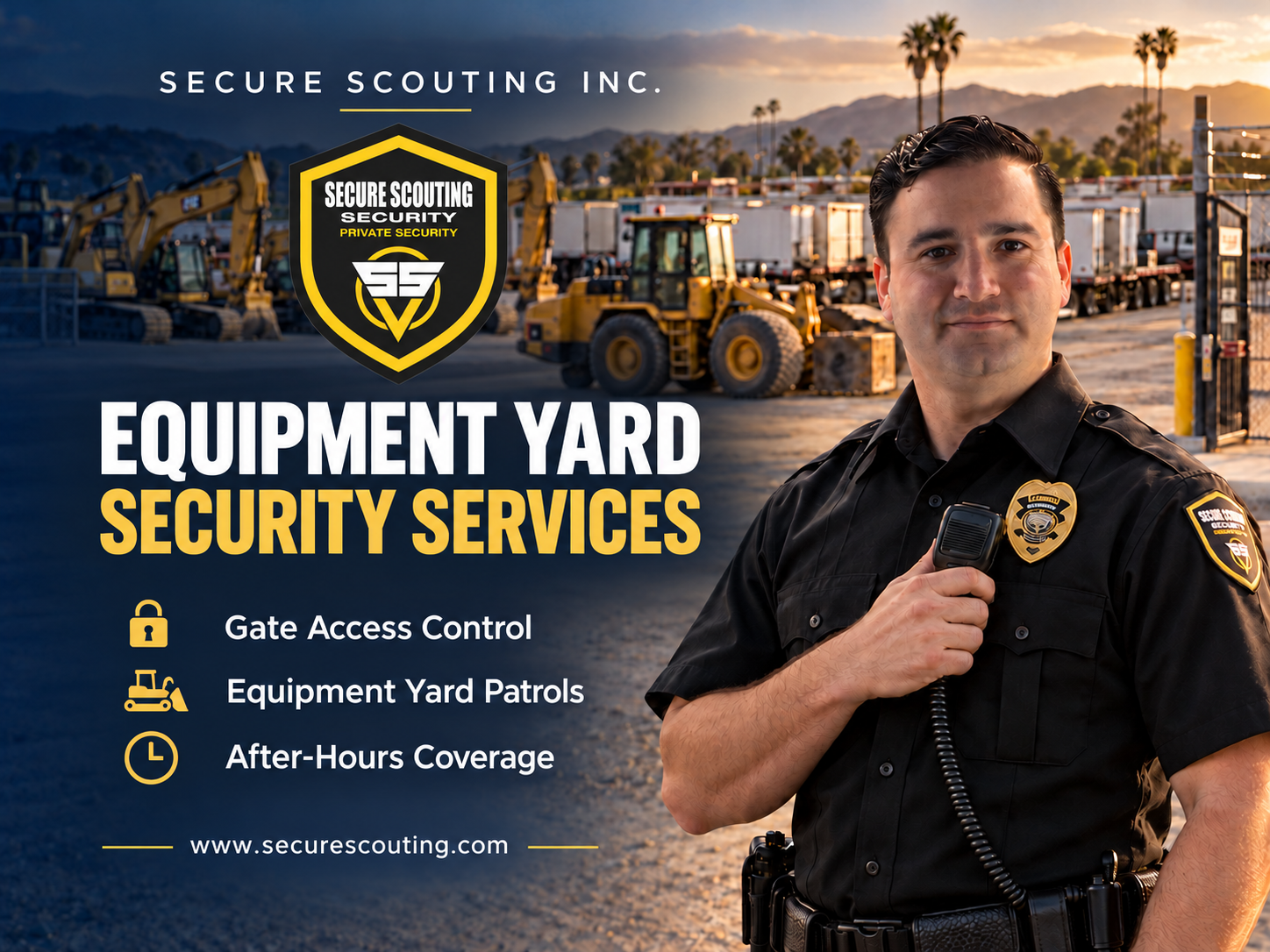
Equipment Yard Security Services: 7 Powerful Benefits for Your Business
Equipment Yard Security Services help commercial businesses protect machinery, tools, trailers, and work vehicles through controlled access, visible patrols, and organized reporting. Whether you operate a contractor yard, equipment rental facility, or industrial storage property, dependable security supports the assets your team needs to keep working.
A locked gate is a useful starting point. However, busy delivery schedules, outdoor storage, and quiet overnight hours require additional attention. Security officers can help verify arrivals, observe equipment movements, and report concerns before they go unnoticed.
Secure Scouting Inc. develops security coverage around your property’s layout, operating hours, and approved procedures. Our goal is to help commercial yard managers maintain accountability and address security concerns without disrupting daily operations.
Why Commercial Equipment Yards Need Security
Equipment yards often contain valuable assets spread across large outdoor areas. Excavators, forklifts, generators, compressors, and trailers may remain on the property overnight or move between several job sites.
Meanwhile, employees, contractors, delivery drivers, and customers may use the same entrance. Without clear procedures, an unauthorized pickup can be difficult to distinguish from a routine departure.
Common security concerns include:
- Unauthorized visitors entering restricted storage areas
- Missing tools, batteries, attachments, or spare parts
- Equipment leaving without an approved release
- Damaged fences, gates, locks, or storage containers
- Trespassing and vandalism after business hours
- Limited records of deliveries and vehicle movements
Equipment yard security services help address these concerns through a consistent combination of observation, access control, and communication.
7 Benefits of Equipment Yard Security Services
1. Organized Gate Access and Visitor Verification
The main entrance is a critical control point. Security officers can follow your access procedures to check identification, confirm the purpose of a visit, and record arrivals.
For example, a driver collecting a rented excavator may need authorization from your dispatch team before entering the loading area. If the pickup is not listed, an officer can contact the designated supervisor for instructions.
Gate duties may include:
- Verifying employee and contractor access
- Checking scheduled deliveries and pickups
- Recording visitor names and vehicle details
- Directing drivers to approved locations
- Reporting unexpected arrivals
These procedures help managers understand who is on the property and why they are there.
2. Better Accountability for Equipment Movements
Equipment often leaves a yard legitimately, making release verification especially important. Security officers can compare departures with your approved pickup records or contact an authorized representative.
Depending on your procedures, movement logs may record equipment identifiers, departure times, driver details, and the person approving the release.
Officers should follow written instructions rather than independently deciding who owns an asset. Clear release procedures reduce confusion and provide useful records when managers investigate an unexpected movement or delayed return.
This support is particularly valuable for rental yards and contractor facilities handling several equipment transfers each day.
3. Visible Patrols Around Storage Areas
Large machinery, parked trailers, and storage buildings can obstruct sightlines. A guard at the entrance may not be able to observe every part of the property.
Foot or vehicle patrols allow officers to check designated areas, including:
- Perimeter fencing and secondary gates
- Machinery storage rows
- Maintenance buildings and tool containers
- Trailer parking areas
- Loading zones and isolated corners
During patrols, officers can report open doors, damaged locks, fence gaps, or unusual activity. Patrol routes should account for moving machinery, restricted work areas, and site safety rules.
Learn more about SSI’s security patrol services for properties that need observation beyond the main entrance.
4. After-Hours Observation and Reporting
Once employees leave, a yard’s activity level changes. An unfamiliar vehicle near a secondary gate may be easier to overlook when no staff members are present.
Equipment yard security services can include evening, overnight, weekend, or holiday coverage based on your needs.
Assigned duties may involve checking designated gates, patrolling storage areas, observing unexpected arrivals, and notifying management when concerns arise.
If your yard accepts overnight deliveries, officers need clear instructions about expected vehicles and access approvals. A written contact list also helps them reach the right person when an arrival falls outside the normal schedule.
5. Attention to Tools and Portable Assets
Heavy machinery is highly visible, but smaller assets also require protection. Batteries, power tools, attachments, and replacement parts may be easier to move or overlook during routine checks.
Security coverage can support your storage procedures by observing designated areas and reporting signs of tampering.
Businesses can strengthen these efforts by:
- Keeping portable assets in locked storage
- Maintaining serial numbers and equipment photographs
- Assigning responsibility for keys and access codes
- Recording equipment transfers
- Reviewing inventory discrepancies promptly
For example, an officer may report a damaged container lock so management can secure the area and check its contents. Security observations become more useful when they are supported by accurate asset records.
6. Coordination With Cameras and Lighting
Guards, cameras, lighting, and fencing serve complementary purposes. Cameras can provide visibility into selected areas, while officers can assess activity on site and follow response procedures.
A yard security review should consider entrances, storage rows, blind spots, and the effect of parked machinery on camera views.
Useful questions include:
- Are gates and pedestrian entrances adequately lit?
- Do equipment rows block important sightlines?
- Who reviews camera alerts?
- How are damaged lights or cameras reported?
- What happens when suspicious activity is observed?
Where monitoring is part of the agreed service, SSI’s camera monitoring services can support a broader security plan. Coverage should be designed around the property, with clear responsibilities for reviewing alerts and responding to concerns.
7. Clear Incident Documentation
Good reporting gives managers information they can act on. Officers can document access exceptions, unusual activity, damaged barriers, and other observations relevant to the assignment.
An effective report explains what happened, where it occurred, when it was observed, and what action was taken.
Reports should separate observations from assumptions. Finding a storage container open, for example, does not establish that a theft occurred. Management still needs to check the contents and review the circumstances.
Consistent reporting helps businesses identify recurring concerns and adjust procedures when necessary.
Equipment Yard Security Services for Different Commercial Operations
Every yard operates differently. A rental facility may prioritize customer pickups, while a contractor yard may need greater attention during overnight storage.
Security coverage can be tailored for:
- Construction and contractor equipment yards
- Heavy equipment rental businesses
- Utility equipment storage facilities
- Industrial machinery yards
- Commercial truck and trailer storage
- Landscaping equipment yards
- Maintenance and service company properties
The right plan considers your asset types, property size, entrance locations, staffing schedule, and equipment movements. It should also define duties clearly so officers understand the limits and priorities of their assignment.
How to Build an Equipment Yard Security Plan
Start by identifying how people and equipment move through your property. Review who can authorize access, where valuable assets are stored, and which areas receive limited observation.
Next, establish written post orders. These instructions should explain gate procedures, patrol areas, reporting requirements, and emergency contacts.
A practical plan should address:
- Normal operating hours and after-hours access
- Approved delivery and pickup procedures
- Equipment release verification
- Restricted areas and safety requirements
- Incident reporting and management notifications
- Coordination with existing cameras and lighting
Review the plan when your operations change. Adding a new storage area, changing delivery hours, or using a temporary entrance may create different coverage needs.
For additional background on fraud and theft prevention, visit the National Insurance Crime Bureau’s prevention resources.
Equipment Yard Security Services Across California
Secure Scouting Inc. helps commercial businesses plan equipment yard security services in Hayward, Dublin, Stockton, Sacramento, El Cajon, Chico, and Yuba City, along with surrounding communities.
Whether your priority is gate control during busy operating hours or patrols when the yard is closed, coverage should reflect your property’s actual workflow.
SSI works with designated site contacts to establish duties, reporting expectations, and access procedures. This helps security officers support your operation consistently.
Frequently Asked Questions About Equipment Yard Security Services
What do equipment yard security services include?
Coverage may include gate access control, visitor verification, foot or vehicle patrols, equipment movement logs, after-hours observation, and incident reporting. The specific duties depend on your property and service agreement.
Can security guards verify equipment pickups?
Yes. Officers can check pickups against approved records or contact a designated supervisor. Your business should provide clear release procedures and identify who can authorize departures.
Are patrols enough for an equipment yard?
That depends on the property. Periodic patrols may suit some locations, while yards with frequent access or ongoing concerns may need a dedicated officer. A site review helps determine suitable coverage.
Can security officers work with existing cameras?
Yes. Officers can complement camera systems through on-site observation and established response procedures. Any camera monitoring responsibilities should be included in the agreed scope.
How much do equipment yard security services cost?
Pricing depends on coverage hours, staffing, property size, officer duties, and site conditions. A customized quote allows you to compare coverage options for your operation.
Request Equipment Yard Security Services From SSI
Your machinery, tools, and vehicles support your business every day. A clear security plan helps maintain controlled access, organized equipment movements, and dependable reporting.
Secure Scouting Inc. can help you develop equipment yard security services around your commercial property’s needs.
Request a free security quote today.
Phone: (510) 688-3999
Email: [email protected]
Website: www.securescouting.com